Texas Fun Facts: Interesting Facts About the Lone Star State You Probably Didn’t Know

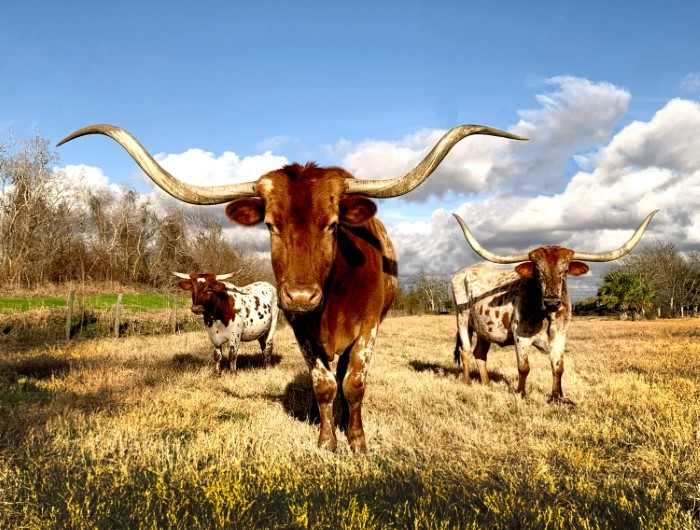
Cowboys, oil rigs, wide roads – that’s how people usually picture Texas. Yet what lies below isn’t just big skies or scorching sun. Hidden patterns emerge from old twists of fate, land shaped by chance, laws built on exceptions. Not spectacle drives these traits, but slow ripples through cities, rules, selves. Their power hides in plain sight – ordinary, unseen, everywhere.
Quick Texas Fun Facts
Here are a few interesting facts about Texas before exploring the details:
- Texas operates its own independent power grid.
- Landowners often own the groundwater beneath their property.
- The state has the largest highway network in the United States.
- Texas was once an independent country.
- German, Czech, Spanish, and Indigenous languages have all shaped Texas culture.
Texas Has Its Own Power Grid
Electricity often slips through the cracks. Across most of the United States, power flows across just two massive networks known as the Eastern and Western Interconnections. Texas had a chance to link up with one of those. It chose another path entirely. Nowhere else did something quite like this. The state created its very own system, separate and distinct. This network goes by the name of the Texas Interconnected System.
Why Texas Built a Separate System
Oversight falls to an organization called ERCOT – short for Electric Reliability Council of Texas. Out of nowhere came not some bold dream but a way to dodge rules. Back then, government control covered only cross-state energy flows. Staying inside its own lines let Texas escape those controls. What showed up later? A closed system unable to pull in help when trouble hits – like what happened during the cold snap of 2021. Not freedom is at play here – just old habits pretending to be choice.
Texas Has Unusual Groundwater Laws
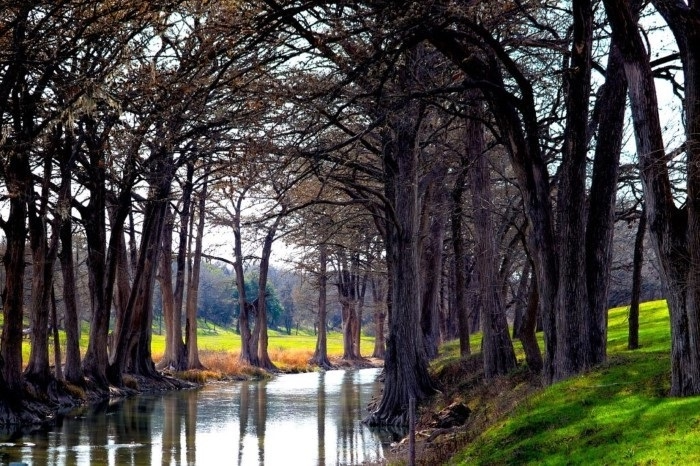
A lone well might run dry while a neighbor’s keeps flowing. That imbalance ties back to an odd legal idea in Texas. While many places treat water as shared, here the landholder owns what lies below. Pull up gallons without asking anyone else nearby.
Water Ownership Works Differently
The habit began long ago, borrowed from old British rules that did not fit desert climates. Years passed, tensions grew between farms and towns alike. Sinking ground appeared around Houston, cracked by thirst underground. When towns set up protected zones, follow through depends on who’s in charge. It holds together – right up until it breaks; once water levels drop, fixes arrive past the point of help.
One State, Four Climate Zones
Out here, land shapes life in quiet ways. Though Texas fits four climate zones inside its borders, clocks stay fixed on Central Time across the board. Humid air hangs heavy near the Gulf, while sunbaked flats stretch wide around El Paso. Weather turns sharp corners from east to west. Still, rules made in Austin apply just the same everywhere.
Geography Doesn’t Always Match Policy
Flooded fields near Louisiana see little benefit when aid targets dry farms in West Texas. Where soil cracks under heat, help arrives shaped wrong for soggy ground. Growing things respond to place; money moves on paper rules slow to shift. One size meant to cover miles of difference often fits none well.
Texas License Plates Tell a Story
Most people miss the quiet way Texas tags mirror shifting times. Starting in 1969, each carried “The Lone Star State” – earlier versions showed only county numbers. A single message replaced scattered codes, quietly following postwar movement that swelled cities and stirred local pride.
Designs Continue to Evolve
Lately, custom choices tell another story – Spanish blends appear more often, school colors pop up, service emblems too, far beyond dusty horseman designs. Tags do more than name cars – they hold snapshots of who we now claim to be.
Texas Has the Largest State Highway Network
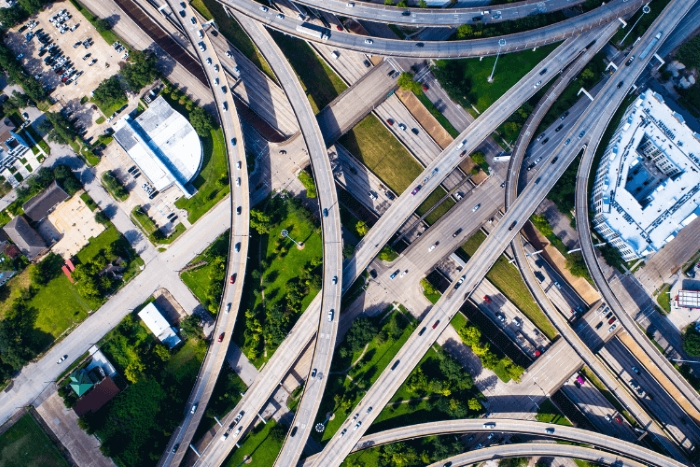
Roads come up next. With more than eighty thousand miles, Texas runs the biggest state highway network in the country. In a space that wide, adding lanes might sound like common sense, still traffic stays heavy. The reason sits in how extra room pulls additional drivers – more capacity leads to more use, simply put.
Bigger Roads Don’t Always Reduce Traffic
Out past the city lights, fresh roads unroll like ribbons – cars flow easier at first, yet soon swarm just as before. As neighborhoods push farther into open land, commutes stretch longer. Riding trains or buses? That happens less often, especially where fewer people live beyond Texas’ biggest towns. Where service exists near Austin or Houston, routes stay narrow, stops few. Behind the wheel most remain, not always by choice, simply because getting around another way hardly links up.
School Funding Varies by Location
Out here, how schools get money shows a strange twist. Local property taxes carry most of the load in Texas. When neighborhoods have higher incomes, their students bring in more funds. Struggling areas fall short – state help does not close the gap.
Property Taxes Shape Education
In certain countryside regions, spending per child dips below nearby states due to cheaper houses. Change creeps forward at best. Still, courts keep pointing out the unfairness in how things are set up, even though changes by lawmakers only go so far. The gaps stay wide – not just because people ignore them, but because the rules of the game block higher taxes.
Texas Was Once an Independent Country
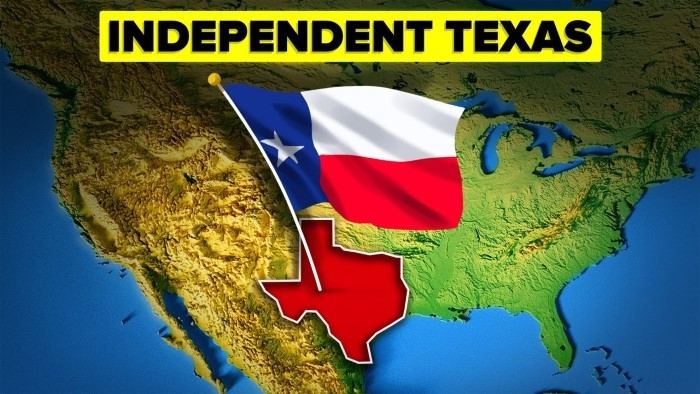
Once upon a time, Texas belonged to Mexico before becoming its own country between 1836 and 1845. Though short, those years left deep marks. Settlers arrived after promises of free land, yet confusion followed when claims began clashing.
Old Borders Still Leave Traces
Legal battles dragged on, some lasting far beyond the century mark. Even today, certain borders stayed unclear until nearly a hundred years ago. Oddly shaped counties and contested paths across southern ranches still echo that tangled past.
Texas Is Home to Many Languages
Last up, words people speak. Though most folks talk Spanish, some corners of Texas keep quieter tongues alive.
More Than English and Spanish
In places like Fredericksburg and New Braunfels, German used to rule the streets. Even now, a few spots – West, for example – still murmur Czech during gatherings where making kolaches turns into friendly competition. Out there, where Comanche echoes now and then through local workshops, fluent voices remain rare. Not laws, but people keep it alive – uneven work, quiet, never quite giving up.
More Texas Fun Facts
- Texas operates an independent electrical grid managed by ERCOT.
- The state has the largest highway system in the United States.
- Groundwater ownership follows different legal rules than many other states.
- Texas was an independent republic before joining the United States.
- German and Czech communities have left lasting cultural traditions across parts of the state.
Quiet things stay quiet. Beneath the surface they linger, tucked into everyday choices. You do not need to marvel at them. Just see what sits there, unchanged: setups built on luck, old habits, and half-agreements. Out of step? Texas doesn’t stand apart just by breaking pattern. What pulls attention is how old blueprints – set decades back – still shape daily paths, clear under its glare.