Japanese Game Shows: The Zany, Hilarious, and Genially Ridiculous World of Japanese Television Challenges

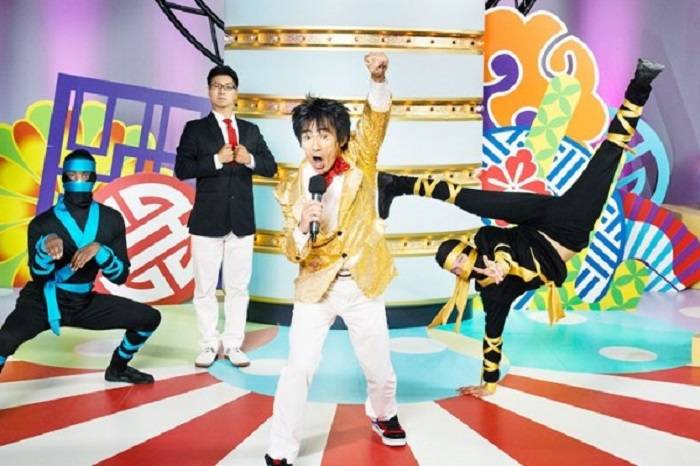
Walk into any Japanese living room on a Saturday night, and there’s a good chance you’ll see something utterly ridiculous, and impossible to look away from. A man trying to climb a staircase coated in oil. Contestants being ambushed by ninja attackers. People screaming while riding roller coasters… blindfolded. This is the world of Japanese game shows, loud, colorful, chaotic, and somehow, deeply clever.
Like the Cracker Barrel Peg Game, they look like simple entertainment at first. Just a few wild stunts and silly laughs, right? But stick around, and you’ll realize they’re a masterclass in human psychology, pop culture, humor, and even endurance. They test limits, intellectual, physical, and sometimes moral. They confound, fascinate, and baffle. They do it with a smile. Which is as contagious as it is fiendish.
We start this journey on neon-plastered sets and foam-lined obstacles. Each segment is a checkpoint, a plot twist to the trail, a slapstick tumble into the next level. Buckle up, people, things are going to get crazy in the maze of Japanese game shows.
What Are Japanese Game Shows?
Japanese game shows are TV entertainment shows. It mixes humor, challenges, and competition-mostly a healthy dose of silliness. Western game shows can be a trivia or games of chance. But these game shows entail physical comedy, humiliation, offbeat staging, and unpredictable outcomes.
They are equal parts spectacle and strategy.
The challengers are not random volunteers. Occasionally they are actors, comedians, or even pro athletes. But in Japanese TV land, everybody’s game. Celebrities or students, the humiliation rules prevail everywhere.
Watch out for:
- People leaping into foam pits
- Sliding down greased slides
- Shouting in agony, shock, or hilarity
- Zooming away from mechanical dinosaurs
- Trying not to laugh, otherwise face slapstick revenge
- And yet there is a rationality behind the madness.
These shows are not slapstick. They’re choreographed chaos. There is timing, suspense, and actual tension. They know exactly how to keep your attention—and never let it go.
Why Japanese Game Shows are a Hit
It’s not all show. Something more is at play.
- First of all, they’re universal. You don’t need to be able to read Japanese in order to laugh at a person falling off a soap slide. It’s visual, plain, and infectious.
- You never know what’s going to happen. As they are unpredictable. This surprise factor keeps audiences at the edge of their seats.
- They’re on the cutting-edge. Japanese game shows push the limits. From invisible limits to massive mousetraps for human players, they redefine the concept of “challenge” each and every episode.
- They’re oddly admirable. You watch a guy get hit by 10 dodgeballs in the face and still struggle to win. There’s something of a hero in it.
- They’re social. They’re viewed by families. They’re shared around by workmates. Entire festivals are organized around them.
- And best of all, more than anything, best of all, they’re humorous. Ridiculous, sidesplitting, aren’t-they-nuts humorous.
A Brief History of Japanese Game Shows
These game shows started in the 1950s. Television was still in its infancy at that time. The early game shows were really quiz shows, they were straight American-copy imports. But the Japanese did not allow it to stay that way long. And that is how the genre came to change from tame to wild.
The 1980s and the 1990s were the halcyon days
Shows like “Takeshi’s Castle” introduced physical humor, large-scale obstacle courses, and costumed characters. This was the birthplace of the Japanese game show identity: chaotic, funny, and endearingly low-tech.
By the 2000s, shows became even more daring and bizarre. Internet culture helped spread clips globally. Suddenly, people around the world were laughing at men being stuck inside phone booths filled with water.
Today, these game shows are a multibillion-yen industry. This has an influence reaching far beyond Japan.
Checkpoint: Takeshi’s Castle – The Cult Classic
No conversation about Japanese game shows can begin without “Takeshi’s Castle.” Premiering in 1986 and hosted by actor-director Takeshi Kitano, the show featured hundreds of contestants attempting to storm a castle through increasingly absurd challenges. Giant foam boulders. Slippery walls. Narrow planks over muddy moats. Most contestants failed. Gloriously. Painfully. Hilariously.
And yet, it was never cruel. No jackpot, just the joy of watching individuals try, get it wrong, rise to their feet, and laugh. It made it a cult phenomenon not just in Japan, but throughout Asia, Europe, and America subsequently. It was the Mount Fuji of game shows, the symbol everyone knows.
Side Quest: Japanese Game Shows That Went Viral
Sometimes a clip goes haywire in Japan and breaks the internet. Here are some of the worst culprits.
- “Silent Library” – You must sit through painful or disgusting challenges without a peep in a pretend library. Fart noises, burning candle wax, face slapping—all without wincing. Otherwise.
- “Human Tetris” – A wall of hole shape comes at you. Don’t fit the shape, and you’re pushed into a pool.
- “Dero!” – Trivia is responded to by contestants as the floor gives way underneath them, the walls close in on them, or they’re hoisted over chasms.
- “Don’t Laugh” Series – Laugh once and they’re rewarded with a harsh whack or lash. It’s an endurance test of maintaining a straight face for five hours straight and sheer madness.
They are available on YouTube with millions of hits, subbed mostly or not at all. Laughter, after all, does not need to be translated.
Creative Genius Behind the Madness
You would imagine that such games are made by lunatics. But the truth? They are typically developed by geniuses. Japanese game show makers are directors, psychologists, and engineers. They know how to make people’s funny bone twitch. They analyze reactions. They rehearse stunts. They build complex sets with surprise safety. Right from camera angles to music cues, everything is planned to provide maximum entertainment.
There is an excellent sense of timing, build, and setup for humor. You view a Japanese game show as if you’re viewing a magic trick. You know it’s silly. But it’s done so well that you can’t help but be impressed.
The Role of the Comedian
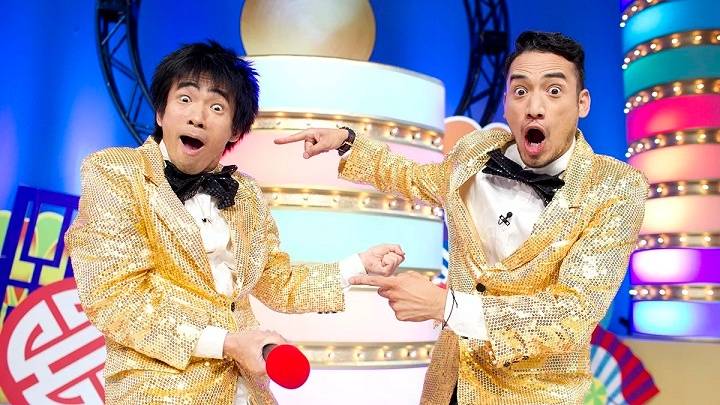
Comedians, or “owarai geinin,” play an integral part in the formula. Most of the game shows are built upon comedy duos. There is a straight guy and there is a clown. They reply, they scream, they complain, or they are fined.
Their exaggerated reactions, yells, arm flailing, mewling gasps, are all revealed. It is not phony; it is stylized. And folks enjoy it. They go on to become household names, hosting variety shows, doing anime voices, or appearing in films. A game show is usually where their stardom begins.
The Psychology of Punishment and Embarrassment
Fascinating fact: Japanese game shows are replete with punishment, embarrassment, or humiliation of the participants. But never cruel. In Japan, suffering with a smile is good. “Gaman” means to endure patiently affliction. So when a contestant gets whacked by a huge mallet and pokes fun at it, it’s not embarrassing, it’s a hero. The crowd laughs at the contestant but not with sympathy. That cultural attitude makes all the difference. What is humorously funny in one country is cruel wit in another.
Create Your Own Japanese Game Show at Home
Want to bring the fun home? You can! Host your own mini Japanese game night. This is how:
Create DIY games like:
- Butt-balloon popping
- Blindfolded guess the food
- Try-not-to-laugh games with friends reading dad jokes
Have a punishment system. Maybe:
- Winner eats snacks
- Loser gets drawn-on face
Film it, edit it, and post online if you’re brave. It’s a great party idea for a family fun night game, or even a team building activity at work. Just keep it safe, silly, and respectful.
Japanese Game Shows in Pop Culture
They have broad ramifications that go far, far beyond Japan.
- Shows like “Wipeout” and “Hole in the Wall” were straight-up inspired by Japanese concepts.
- YouTube also contains a large repository of Western producers reacting to Japanese game show footage.
- Even vido games like “Fall Guys” or “Human: Fall Flat” appropriate the aesthetic, cartoony, ridiculous, and competitive.
Even US television stations have been purchasing Japanese shows for overseas productions. It’s no longer niche, it’s international.
Children’s Game Shows and Schoolrooms

Japanese game shows aren’t klutzy and torture every second. There are loads that are family-friendly and educational. Educational programs blend trivia with movement. Shows like “Tensai Terebi-kun” blend science, mathematics, and language with play.
For the classroom teacher, clips are taught as Japanese language class or cultural studies. It’s fun, interactive, and educational. Even kids’ programs like “PythagoraSwitch” blend Rube Goldberg machines with logic problems. It’s not technically a game show, but has the same wacky, brainy attitude.
High-Tech Meets Old-School Mayhem
New-generation Japanese game shows are blending technology with heritage. Others use AR (Augmented Reality) to create moving sets, moving walls, and virtual personas. Others use drones for live shots, 3D projection for play areas, and motion capture suits.
But the essence is the same: people doing something absurd with a deadpan face, and keeping us in stitches.
Your Own Challenge Club: Japan-Inspired Game Night
Why not make it a habit? Start a challenge club with friends. Host it on a rotation basis. Choose a theme. Invent your own challenges based on:
- The Silent Library – Stay quiet playing Jenga blindfolded
- Obstacle relay – Make a home-made course out of chairs, pillows, spoons, and socks
- Trivia meets punishment – Wrong answer = ice water in the socks
It will create memories that won’t be forgotten, and hopefully even viral clips.
Final Thoughts
Japanese game shows are more than just weird TV. They’re a cultural phenomenon, a genre of their own. They are a study in joyfully embracing the absurd. They test human resilience, and show creativity. They make millions of people laugh. If you’re binging clips online, recreating challenges at home, or just sharing a laugh with friends. Then remember:
In the midst of a harried, sincere, and screen-weary world, these game shows are a soft reminder. To tumble downward, laugh, and get back up again. For sometimes it is sufficient to slip on a banana peel to be well. And as the final peg in a triangle board, if one survives the craziness and still gets to smile, then the game is won.