Sevens Card Game – The Simple-Looking Tabletop Adventure That’s Anything But

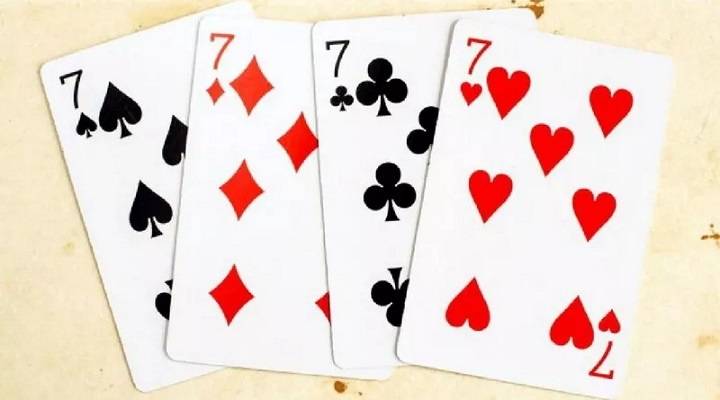
You sit down at the table. A pack of cards is opened with a snap. No board. No pegs. No dice. Just fifty-two playing cards and a glint in an eye.
“Let’s play Sevens,” they say.
And with that, the fight begins.
Welcome to Sevens. It is also known as Fan Tan, Parliament, or Domino in some parts of the world. It’s one of those games, which sneaks up on you. It looks like it’ll be over in five minutes. But one wrong move and you’re boxed in, outplayed, and watching your card pile grow while your friends laugh.
It’s strategic. It’s competitive. It can be loud or quiet. And much like the Cracker Barrel Peg Game, it looks easy—until you try to play it.
Throughout this journey, we shall explore each course Sevens must follow. From basic rules and memories of childhood to cutthroat strategies, house rule chaos, team modifications, tournament ideas, and life lessons hidden within this tiny card game.
So deal yourself in. The time has come to battle the Sevens battlefield.
What Is the Sevens Card Game?
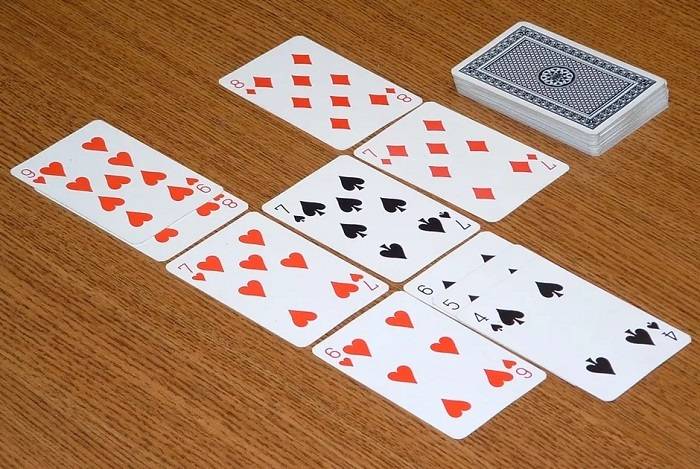
This game is an easy, light, multi-player card game. It can be played with a standard deck of cards. The objective is to get rid of all your cards by piling up runs. Which is either ascending or descending from the seven of each suit.
The name comes from the one rule: you must play a seven to start every suit.
Players build up to King and down to Ace.
It’s simple. But in use? Otherwise.
There’s blocking, storing, bluffing, and strategic chaos. Friendships will be strained to the breaking point. Strategies whispered in confidence. And when someone wins with no cards left?
Victory has never been sweeter.
Why People Love Sevens
It’s universal. You only need a standard deck and friends.
It’s easy to master. Even small kids can play.
It’s scalable. Plays 3 to 8 people (more with multiple decks).
It’s fast. One round lasts 10–15 minutes.
It’s really strategic. You’ll learn to keep cards, build traps, and spot weaknesses.
It’s perfect for travel. No equipment. No setup. Just shuffle and play.
And like with so many of the so-called simple games, the more you do it, the more hooked you become.
Level One: The Basic Rules of Sevens
Let’s begin at the beginning.
Divide the entire deck equally among the players.
The first player is the one dealt the 7 of Diamonds and he plays it face-up in the center.
Players then play in a clockwise direction. On your turn, you can:
- Play a 7 in another suit to start a new pile
- Run up (8, 9, 10…) or down (6, 5, 4…) from a 7 in the same suit
- If you don’t play, pass
- The first player to get out of cards wins.
Easy, right?
But the trick is how you do it, and when you don’t play. Keeping a key 6 or 8 in your hand can prevent the next player from moving forward. Clever passing can force another player to play a card he doesn’t want to.
The regulations are subtly complex.
The Hidden Strategy
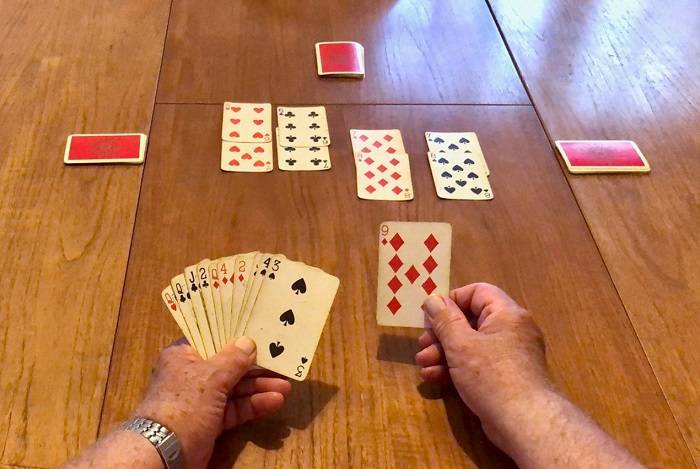
On the surface, Sevens seems reactive. You play when you can. You pass when you can’t.
But master players don’t.
Notice what your opponents’ best suits are. Pay attention in your head.
Save key connectors, like 6s and 8s, to deny others the chance to play.
Don’t always start with 7s. Each 7 you play makes the table more flexible.
Bribe individuals into opening up suits that are good for you.
Pass first to obtain information. Play late to deceive.
And sometimes save high or low cards in a suit till someone else starts it.
The game may be built of numbers, but it is all psychology.
Side Quest: Variations from Around the World
Sevens isn’t just one game. It’s a whole family of similar games with minor variations.
- Fan Tan – Played with tokens or chips; players must pay to pass or play
- Domino – Same design, but you play in one direction only
- Parliament – Introduces bidding, betting, and political positions
- Yuto (Japan) – Includes Jokers, which are wild cards
- Serpentine Sevens – You play in an S-shape around the table (excellent for big tables or picnics)
Each variation tweaks pace, strategy, or amount of chaos.
Try them all, and discover which one your group loves the most.
Group Play: Make It a Game Night Staple
Sevens is great for parties, sleepovers, classrooms, and family nights.
- Start with warm-up rounds so new players can learn
- Take turns dealing each round
- Add a scoreboard to track wins
- Play best-of-three or first to five wins
- Establish theme rules: “Slap every 7!” or “No chatter during play”
- Keep it light and playful. The best Sevens games are competitive but funny
Bonus fun: Have the winner make a rule for the next round.
Play in Reverse: Last Card First Challenge
Need a twist?
Play Reverse Sevens.
In this, players attempt to be the last player. To play their final card, not first.
You play the same way. But instead of hoping to win, the objective is to not finish first.
This makes players hold out, mislead, and pass intentionally.
It flips the game upside down, and exposes hidden strategies.
Perfect for teams that have already learned the original game and are looking for something different.
Make Your Own Sevens Deck
For a fun twist, make a do-it-yourself Sevens deck.
Use index cards, recycled playing cards, or draw your own on paper.
Add your own symbols, themes, or designs.
Design special house cards like:
- Wild 7 – Can be used to start any suit
- Skip – Makes next player skip turn
- Lock – Freezes pile for a quick moment
- Bomb – Takes out a whole suit from play
This turns Sevens into a combination of Poker and Uno, and makes every game un预 đoán。
Ideal for teachers, kids, and artists.
Speed Sevens: Wild, Furious, and Fast
Need to accelerate?
Play Speed Sevens, no turns. Everyone moves as fast as possible.
Take a big table. Shuffle cards face down. On “Go!”, players flip cards over and move whenever there is a playable.
Rules:
- No conversation
- You can only move a single card
- If you’re stuck, you’re out
It’s absurd, hilarious, and perfect for groups.
Just be ready for flying cards and loud laughter.
Sevens for Kids and Classrooms
Sevens is a sneaky gem of learning.
It instructs:
- Number order
- Suit familiarity
- Strategic thinking
- Turn-taking and patience
Perfect for kids 6 and up (use face-up hands for beginners).
Teachers can even design customized decks to teach math patterns, vocabulary types, or history trivia.
It’s a stealthy way to make learning fun.
Top Tips for Mastering Sevens
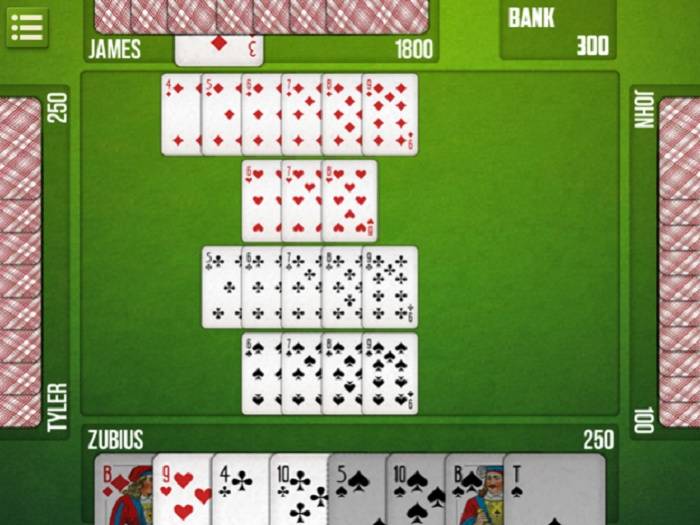
To be a Sevens master, read on for your survival kit:
- Track suits. Think it over in your mind
- Save your connectors. Especially 6s and 8s
- Don’t play 7s straight off every time. Hold off and observe
- Pass early to leave options open later
- Force others to open suits you need
- Make a pretence of weakness. Let opponents think you are trapped
- Block cleverly. Don’t let others get on with their runs
- Time your final card. End on a sting in the tail
- And above all, read the room. The best Sevens players are master manipulators too
Tournament Mode: Make It a Competitive Series
Got a large crowd?
Make Sevens a full-scale tournament.
Setup:
- Elimination brackets
- Scoreboards
- Teams (duo Sevens is nuts)
- Mini-prizes (candy, snacks, card sleeves)
Each round can alter rules or themes.
The final? The winner takes everything.
Challenge you? Add the “No Talking Final” rule, silent showdown.
The crowd looks on. The stakes are higher. And Sevens is greater than a game.
The Bluffing Art in Sevens
Yes, bluffing is allowed in Sevens.
Make faces. Groan as you are dealt your hand. Pretend that you can’t play.
Then boom, there’s surprise 6 of Spades.
Keep a poker face when you possess just that card everyone needs.
Mimic frustration when you are about to win.
Smile as you pass through. Frown when you play.
Use body language as your weapon. Mind games work.
Sevens is not just numbers. It’s performance art.
Fun Fact: Sevens Is a Memory Game in Disguise
You might not suspect it, but Sevens develops memory.
Spots remember, passed cards recall, strategy strategizes, every one requires mental recall.
Everyday play improves concentration, flexibility of mind, and reaction time.
It’s Sudoku with trash talk.
Kids, teens, and seniors alike can all play nightly Sevens.
Last Thoughts
Sevens features no flashing lights, movie music, or board covered with pieces.
But don’t be fooled.
This simple card game is a battle of math, psychology, and determination. A roller-coaster ride of decisions, surprises, and reversals.
It pays to be aggressive. It punishes you for being careless. It laughs at you, makes you groan. And it cheers you on, and whispers threats also.
It seems harmless, until you’re hooked.
Next time someone gets out a deck of cards and says, “Wanna play Sevens?”
Say yes.
Sit down.
And prepare yourself for the most brutal battle for seven of clubs you’ve ever seen.
Because when all the suits are in favor and passes are piling up, there’s only one question remaining:
Do you play now? or wait?